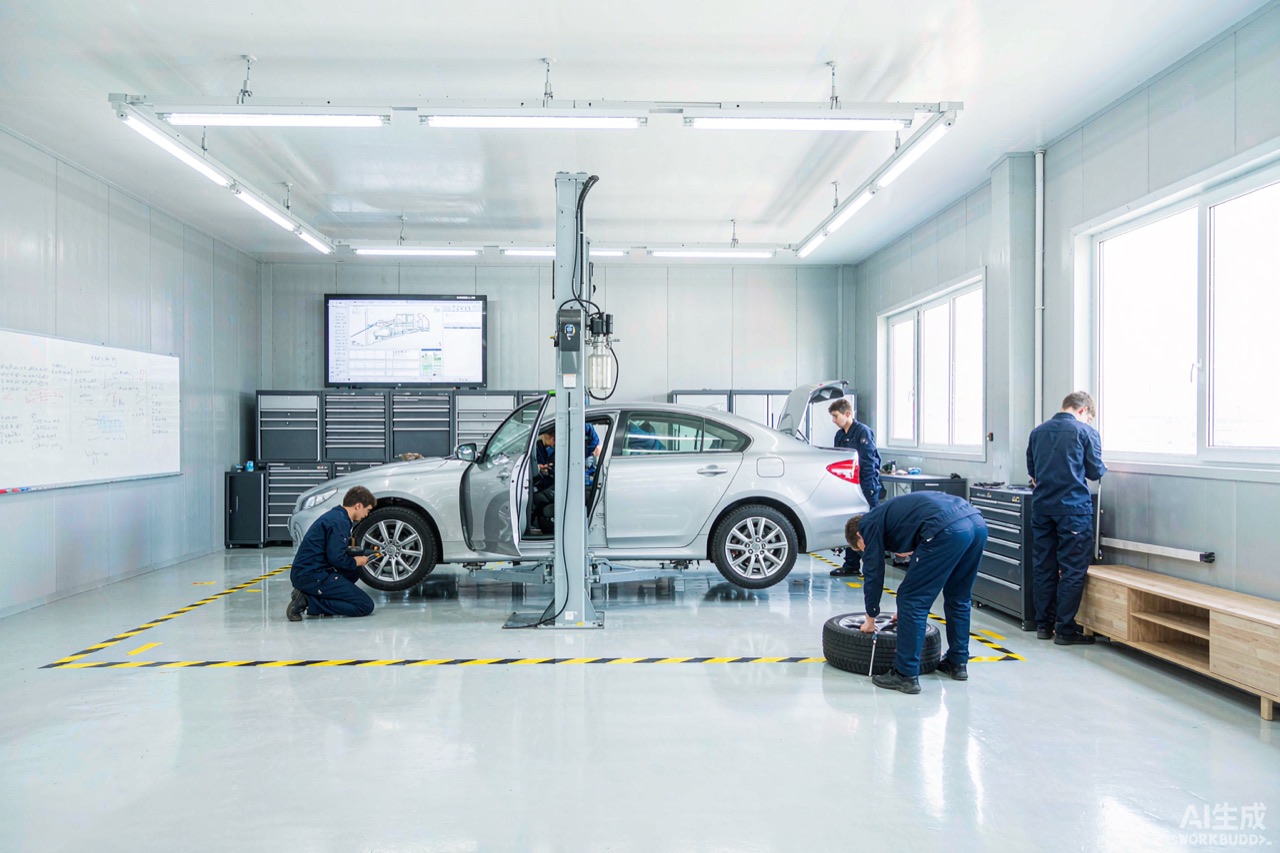
AutoFIX takes people from zero to a paid job in the workshop — mechanical and electrical repair, new-energy three-electric systems, body and paint, electronic diagnosis, and used-car appraisal. 70% of your hours are hands-on, one student per workstation, with a job referral when you graduate.
Every major shares the same teaching method — short theory blocks, then straight onto a vehicle. Switch direction after the trial class if you change your mind.
Engine, chassis, brakes, suspension and 12V electrics — the foundation every workshop hires for.
02Battery packs, drive motors and controllers, taught on real packs with HV safety certification.
03Panel beating, structural pulling, colour matching and a full booth workflow in a real spray booth.
04Correction, ceramic coating, PPF, suspension and brake upgrades — plus how to price and run a bay.
05CAN and Ethernet faults, oscilloscope technique, module coding and ADAS recalibration.
06A 168-point inspection routine, accident screening and valuation for retail, leasing and insurance.
Tuition is published up front. So are the start dates and the number of seats left.
Theory is delivered in short blocks and recorded so you can rewatch it. The rest of the day you are on a vehicle — with an instructor who still works in the trade.
No queuing behind five classmates. Each bay holds a maximum of six students and six vehicles.
Every module ends in a timed practical task scored against an OEM procedure, not a written quiz.
Nine of our eleven instructors came from dealership or OEM service departments; several still take weekend jobs.
Graduates get three introductions to partner workshops. If none converts, we keep referring for 12 months.

Employment data is published every term, including the graduates who did not go into the trade. Partner logos are shown with the type of roles they actually hire for.
“Zero experience to a battery service bay in seven months. The pack teardown module is why I got hired.”
$3,200/month
Trainee technician, first 6 months. NEV and diagnosis graduates average 18% higher.
41 graduates opened their own shop or detailing studio in the last two years, with site selection and supply-chain help from us.
Reviews are collected after the final practical assessment, not at the enrolment desk.
“I came in at 19 with no idea how a brake caliper worked. Twelve months later I am on the service floor of a four-brand dealership. The practical assessments were brutal, and that is exactly why the interview was easy.”
“The evening programme is the only reason I could do this. Two nights a week after work, theory online, and the instructors actually answered messages at 10pm. Finished with a NEV safety certificate and a raise.”
“My son is 17 and I was worried about sending him somewhere that promises jobs it cannot deliver. The open day was honest — they showed the employment spreadsheet, including the ones who quit. He starts in March.”
Two hours in the workshop with an instructor, no obligation and no sales pitch in the bay. Bring gloves if you have them — we supply the rest.
An admissions advisor calls within one working day.
An admissions advisor will call you within one working day to confirm your slot.
What 2026 job postings in the region now ask for, and how to read them before you choose a course.
Our diagnostic lead walks through the same fault tree we teach in DG-330, using a real misfire case.
Capacity for 40 more body-and-paint students per term, with static calibration targets from three OEMs.